
🎖️ACFT Calculator 2025 – Track Your Army Fitness Test Performance
You passed.
But is your ACFT score strong — or just barely safe?
A 360 keeps you in. A 540 gets noticed. And somewhere in between is the difference between “meeting the standard” and looking competitive at a promotion board.
Let’s break this down clearly.
ACFT Calculator
Official Army Combat Fitness Test Scoring
👤 Personal Information
Max Deadlift
3 Repetitions
Standing Power Throw
Distance
Hand-Release Push-ups
Repetitions
Sprint-Drag-Carry
Time
Plank
Time
Two-Mile Run
Time
📊 MOS Categories
Note: The ACFT will be replaced by the Army Fitness Test(AFT) on June 1, 2025. Try the new AFT Calculator !
What Is the ACFT?
The U.S. Army Combat Fitness Test (ACFT) is the Army’s six-event physical assessment that measures strength, power, endurance, agility, and core stability. It replaced the APFT and is scored on a 0–600 point scale, with a minimum passing score of 360 (60 points per event).
The ACFT is designed to reflect real combat readiness — not just push-up endurance.
Maximum score: 600
Minimum passing score: 360
Minimum per event: 60 points
How Is the ACFT Scored?
The ACFT includes six events. Each event is worth up to 100 points. Soldiers must score at least 60 points in every event and earn a combined total of 360 points to pass. Scores are based on age and gender performance standards set by the Army.
Simple structure. But strategy matters.
ACFT Calculator (2025 Standards)
Below is how scoring works. Enter your performance numbers into any official calculator tool (or compare against the table here) to determine your score.
The Six ACFT Events
- 3-Repetition Maximum Deadlift (MDL)
- Standing Power Throw (SPT)
- Hand-Release Push-Ups (HRP)
- Sprint-Drag-Carry (SDC)
- Plank (PLK)
- 2-Mile Run (2MR)
Each event tests a different physical capacity.
ACFT Scoring Chart Overview
| Event | Minimum (60 pts) | Competitive (80 pts) | Elite (90–100 pts) |
| Deadlift | ~140 lbs | 240–280 lbs | 320–340 lbs |
| Power Throw | ~4.5 m | 8–9 m | 10+ m |
| Push-Ups | ~10–15 reps | 40–50 reps | 55+ reps |
| Sprint-Drag-Carry | ~3:00 | ~2:00 | 1:30–1:40 |
| Plank | ~1:30 | 2:30–3:00 | 3:40+ |
| 2-Mile Run | ~22:00 | 16:00–17:30 | 13:30–15:00 |
(Exact standards vary by age and gender. Always verify against official Army tables.)
What Is the Minimum ACFT Score?
The minimum passing ACFT score is 360 points total, with at least 60 points in each of the six events. Failing to score 60 in any single event results in failing the entire test, regardless of total score.
That’s the rule. No exceptions.
What Is a “Good” ACFT Score?
Here’s where most calculator sites stop.
Let’s go deeper.
| Total Score | Interpretation |
| 360–420 | Bare minimum / At risk |
| 421–480 | Meets standard |
| 481–520 | Solid performance |
| 521–560 | Competitive / Promotion-strong |
| 561–600 | Elite tier |
Key Insight:
A 480 passes comfortably. A 540 signals readiness and discipline.
Promotion boards don’t officially assign extra points for ACFT above passing — but perception matters.
Two Specialists:
- Soldier A scores 480.
- Soldier B scores 550.
Both passed.
But who looks physically dominant?
Who appears more prepared?
Who signals discipline and training consistency?
Numbers influence perception.
What Event Causes Most Failures?
Based on reported Army trends and unit-level data:
- Sprint-Drag-Carry
- 2-Mile Run
- Deadlift (in lower-body weaker populations)
The Sprint-Drag-Carry is especially problematic because it combines anaerobic power, grip strength, and endurance under fatigue.
Most soldiers underestimate it.
ACFT vs APFT: What Changed?
The ACFT replaced the APFT under reforms aligned with the Army’s Holistic Health and Fitness (H2F) system.
| APFT | ACFT |
| 3 events | 6 events |
| Push-ups, Sit-ups, Run | Full-body strength + endurance |
| Cardio dominant | Combat performance focused |
| Max score 300 | Max score 600 |
The shift reflects real battlefield movement demands.
Why the Army Changed It
The ACFT was designed to reduce injury rates, improve combat readiness, and better align physical testing with operational tasks, according to standards developed under the Army’s modernization initiatives.
The old test measured muscular endurance.
The new test measures battlefield performance.
Quick Self-Assessment
Before we go deeper:
- Are you failing one event but strong in others?
- Are you plateaued between 480–500?
- Are you preparing for promotion or selection?
Your strategy depends on which category you’re in.
What Most Soldiers Get Wrong About ACFT Scoring
- They over-focus on the run.
- They ignore deadlift strength progression.
- They don’t train Sprint-Drag-Carry properly.
- They don’t understand scoring ROI.
Let’s talk about ROI next.
Because not all points cost the same effort.
Improving your deadlift from 240 to 300 lbs can add more points faster than shaving 45 seconds off your 2-mile run.
Strength gains scale faster than endurance gains in short cycles.
How to Increase Your ACFT Score Fast (Without Wasting Training Time)
Here’s the uncomfortable truth:
Most soldiers train hard.
Very few train strategically.
If your goal is to add 30–50 points in 4–6 weeks, you don’t need random workouts.
You need score ROI.
The ACFT Score ROI Framework
Not all points cost the same effort.
Some improvements require months.
Some can happen in weeks.
Here’s how to think about it:
| Event | Speed of Improvement | Point Gain Potential | Training Complexity |
| Deadlift | Fast | High | Low |
| Power Throw | Moderate | Moderate | Moderate |
| Push-Ups | Moderate | Moderate | Low |
| Sprint-Drag-Carry | Moderate | High | High |
| Plank | Fast | Low–Moderate | Low |
| 2-Mile Run | Slow | Moderate | High |
Strategic Insight:
Strength improvements (deadlift, plank) typically produce faster point gains than endurance improvements (2-mile run).
If you’re short on time, prioritize strength first.
Event-by-Event Optimization Strategy
Let’s break down how to gain points efficiently.
1. Deadlift (MDL) – The Fastest Point Booster
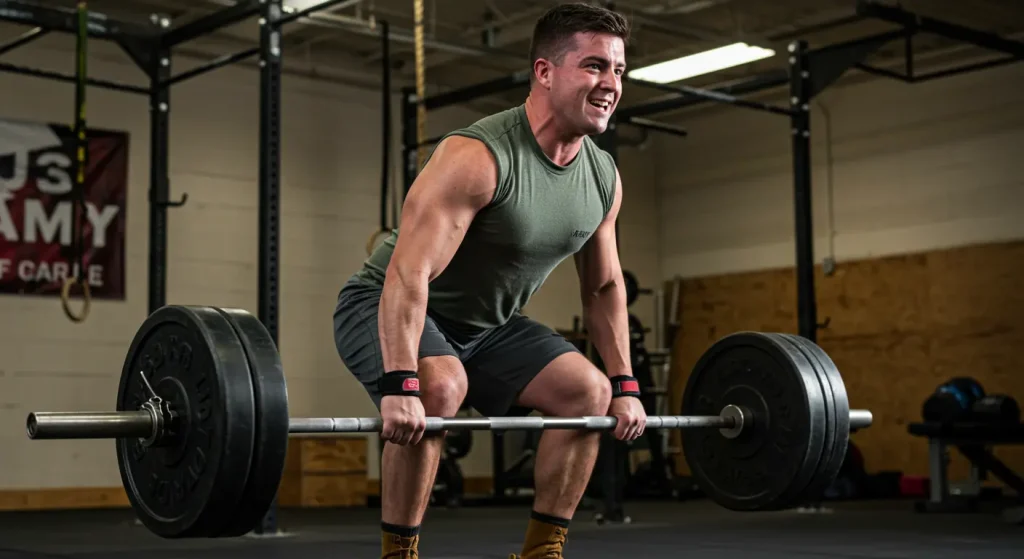
The deadlift has one of the highest ROI profiles.
Why?
Neurological adaptation happens quickly.
Beginner-to-intermediate lifters can add 40–60 lbs in 4–6 weeks.
How to Improve Fast:
- Train heavy 2x per week
- Focus on perfect hinge mechanics
- Use progressive overload (5–10 lb weekly increases)
- Strengthen grip and hamstrings
Common Mistake:
Training endurance circuits instead of heavy sets.
Heavy strength wins here.
2. Standing Power Throw (SPT) – Technique Matters
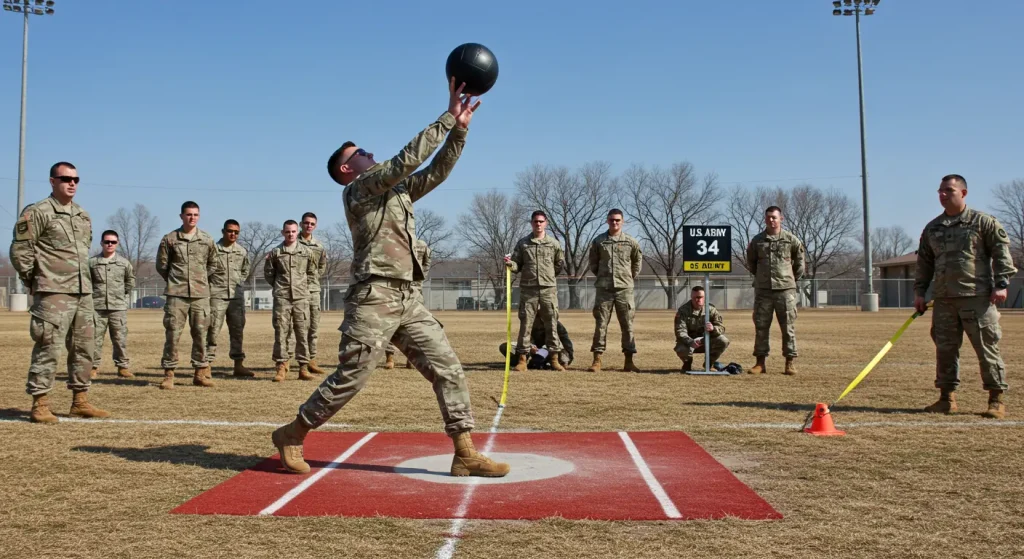
This event rewards explosive hip extension.
Most soldiers lose points due to:
- Poor hip drive
- Weak posterior chain
- Lack of coordination
How to Improve:
- Medicine ball throws 2x weekly
- Kettlebell swings
- Box jumps
- Focus on triple extension mechanics
Small technique tweaks can add 0.5–1 meter quickly.
3. Hand-Release Push-Ups (HRP) – Efficiency Over Ego
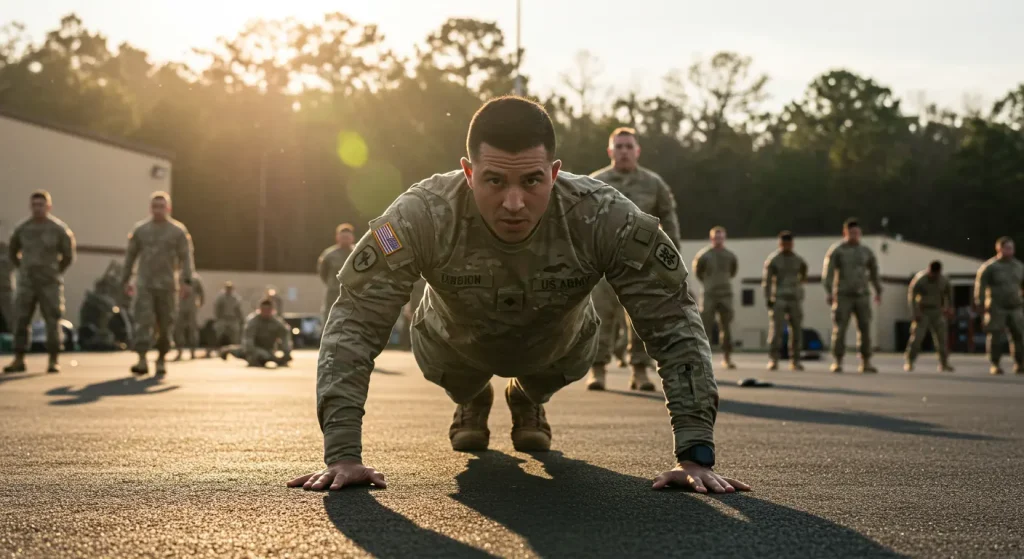
Push-ups aren’t just about strength.
They’re about pacing.
Fast Gains Strategy:
- Grease-the-groove training (daily submax sets)
- Tempo push-ups
- Triceps accessory work
- Core stability drills
Pro Tip:
Improve plank strength — it stabilizes push-up performance.
4. Sprint-Drag-Carry (SDC) – The Silent Score Killer
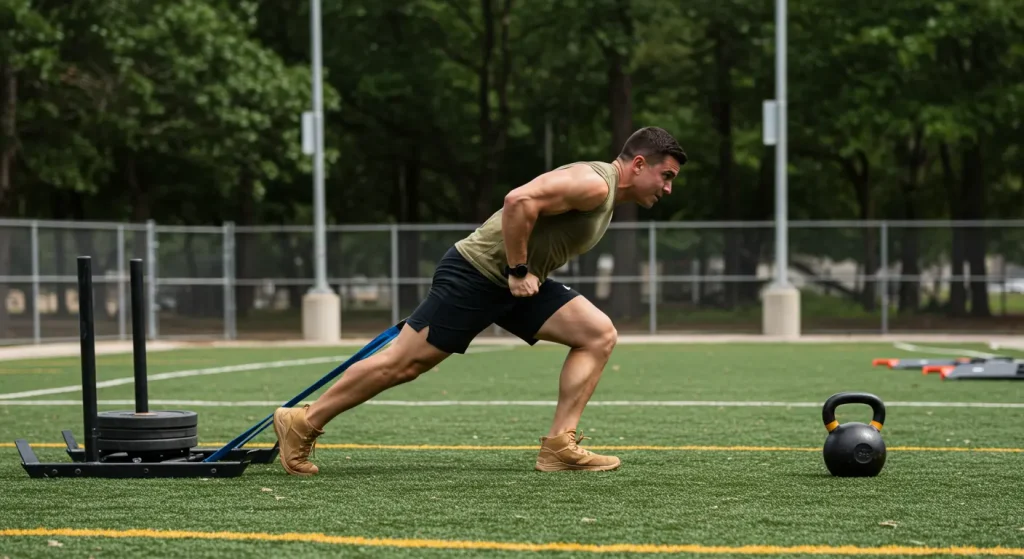
This is where many fail.
The SDC taxes:
- Anaerobic capacity
- Grip endurance
- Mental resilience
Why It’s Hard:
You perform it under accumulated fatigue.
How to Improve:
- Practice the exact event weekly
- Heavy sled drags
- Farmer carries
- Short interval sprints (30–60 seconds)
- Transition efficiency drills
Big Insight:
Most time is lost in transitions — not raw speed.
Train transitions.
5. Plank (PLK) – Quick Stability Gain
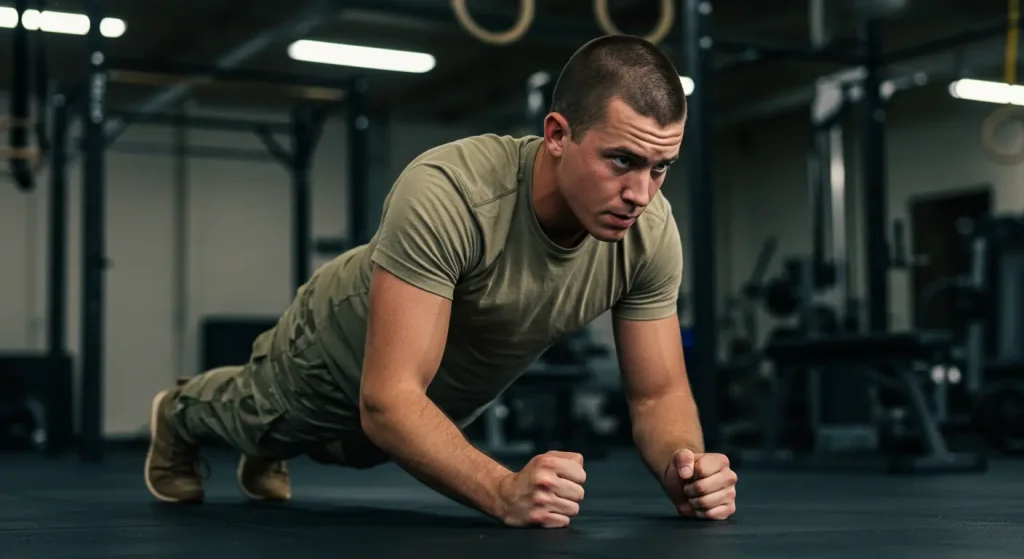
Core endurance improves quickly.
Improve With:
- 3x weekly plank holds
- Weighted planks
- Hollow body holds
Going from 1:30 to 2:30 is realistic in 3–4 weeks.
6. 2-Mile Run (2MR) – The Long Game
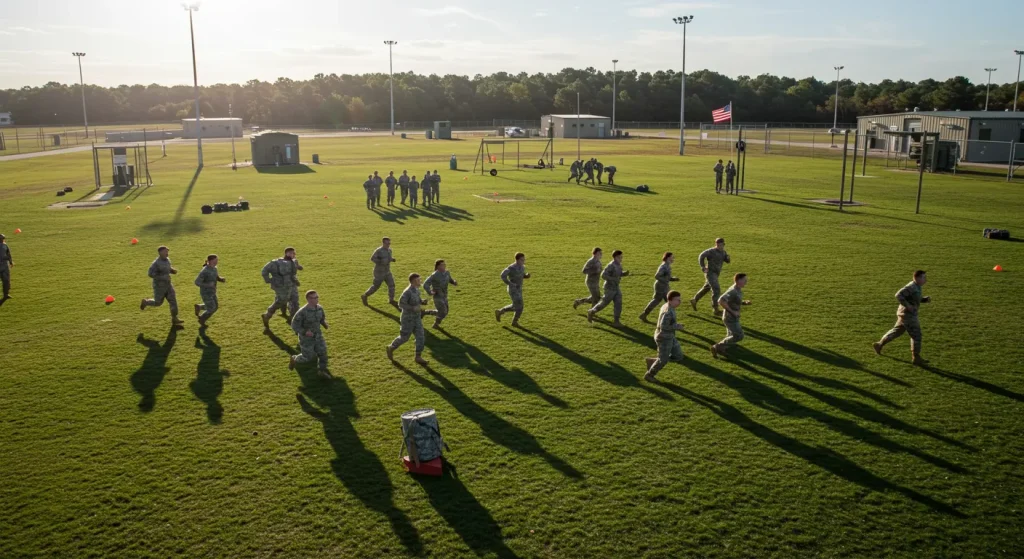
This is the slowest improvement event.
Endurance takes time.
Smart Approach:
- 1 long run weekly
- 1 tempo run weekly
- 1 interval session weekly
- Strength train legs alongside
Don’t overtrain cardio at the expense of strength.
6-Week ACFT Score Boost Plan
Here’s a simplified weekly structure:
Weekly Split
Day 1: Heavy lower body (deadlift focus)
Day 2: Upper body + push-ups
Day 3: Sprint intervals + sled work
Day 4: Active recovery
Day 5: Tempo run
Day 6: Full ACFT simulation
Day 7: Rest
Why Simulations Matter
Running full mock ACFT sessions:
- Builds fatigue tolerance
- Improves pacing
- Reduces test-day anxiety
- Improves transition efficiency
Most calculators don’t tell you that.
The 30-Point Jump Strategy
If you’re stuck at 480–500:
- Add 20 points via deadlift progression.
- Add 10–15 points via Sprint-Drag-Carry efficiency.
- Maintain run performance — don’t over-focus on it.
That alone can move you into the 520+ range.
The fastest way to improve your total ACFT score is not by running more miles — it’s by increasing strength and improving event transitions.
Common ACFT Training Mistakes
- Training like it’s still the APFT.
- Ignoring heavy lifting.
- Neglecting Sprint-Drag-Carry practice.
- Overtraining cardio.
- Not practicing under fatigue.
If your workout doesn’t include sled drags or heavy pulls, you’re undertraining for ACFT reality.
Injury Prevention & Recovery
The ACFT stresses posterior chain muscles heavily.
Protect yourself:
- Warm up hips and hamstrings thoroughly.
- Strengthen lower back gradually.
- Use progressive overload safely.
- Schedule at least one full recovery day weekly.
The Army’s Holistic Health and Fitness doctrine emphasizes recovery and resilience for a reason.
If you had to choose one event that’s holding you back — which one is it?
Now ask yourself:
Are you actually training it directly?
Performance Benchmarks by Tier
| Tier | Deadlift | SDC | 2-Mile |
| Passing | 140–200 lbs | 2:45–3:00 | 20:00–22:00 |
| Solid | 240–280 lbs | 1:50–2:10 | 16:30–18:00 |
| Competitive | 300+ lbs | 1:30–1:45 | 13:30–15:30 |
Use this table as a reality check.
Does Your ACFT Score Affect Promotion?
Officially, the ACFT is a readiness requirement under the U.S. Army.
Unofficially?
Your score influences perception.
While promotion points vary by rank and current policy updates, physical readiness remains part of overall evaluation under Army regulations such as Army Regulation 350-1 (Army Training and Leader Development).
Here’s the practical reality:
- A passing score keeps you eligible.
- A high score signals discipline.
- A low-but-passing score raises questions.
Promotion boards evaluate the whole soldier concept.
Physical readiness is part of that narrative.
What Is Considered a Competitive ACFT Score for Promotion?
A competitive ACFT score is generally 520 or higher. While 360 is the minimum passing score, scores above 520 demonstrate above-average physical readiness and often strengthen a soldier’s professional image in competitive environments.
That’s the difference between compliance and performance.
MOS Considerations: Does Role Matter?
Yes.
Different Military Occupational Specialties (MOS) carry different physical demands.
Combat arms roles often place greater emphasis on:
- Sprint-Drag-Carry
- Deadlift
- Power output
Support roles may not require elite-level scores, but readiness expectations still apply across the force.
The ACFT was designed to reflect operational tasks — not gym aesthetics.
How the ACFT Connects to Army Readiness Doctrine
The ACFT aligns with the Army’s Holistic Health and Fitness (H2F) system — a readiness model focused on:
- Physical performance
- Injury prevention
- Mental resilience
- Long-term sustainability
The shift from APFT to ACFT reflects a move toward operational realism.
The Army doesn’t just want you fit.
It wants you deployable.
What Happens If You Fail One Event?
If you score below 60 points in any single ACFT event, you fail the entire test — even if your total score exceeds 360.
That’s a non-negotiable standard.
Failure may result in:
- Remedial training
- Flagging actions (depending on context)
- Delayed professional progression
Always confirm current policy with your unit leadership, as updates occur.
Frequently Asked Questions
1. What is the minimum ACFT score to pass?
The minimum passing ACFT score is 360 points total, with at least 60 points in each of the six events. Failing to meet 60 points in any single event results in failing the entire test.
2. What is a good ACFT score?
A good ACFT score is generally 480 or higher. Scores above 520 are considered competitive and reflect strong physical readiness. Elite scores fall in the 560–600 range.
3. Can you fail one ACFT event and still pass overall?
No. Soldiers must score at least 60 points in each event. Even if your total exceeds 360, failing one event means failing the test.
4. How much can I improve my ACFT score in 30 days?
Most soldiers can realistically improve 15–30 points in 30 days with focused training, especially by increasing strength and improving Sprint-Drag-Carry efficiency.
5. Does the ACFT replace the APFT completely?
Yes. The ACFT fully replaced the APFT as the Army’s official physical fitness test. It includes six events and better reflects combat-related physical tasks.
6. What event is hardest in the ACFT?
The Sprint-Drag-Carry is commonly reported as the most challenging event because it combines anaerobic endurance, grip strength, agility, and fatigue management.
The ACFT is scored across six events, each worth up to 100 points. Soldiers must score at least 60 points per event and earn a minimum total of 360 points to pass. The maximum possible score is 600. Standards vary by age and gender.
ACFT Score Diagnostic Checklist
Use this quick evaluation:
- Is your deadlift under 240 lbs?
- Is your Sprint-Drag-Carry above 2:15?
- Is your run slower than 17:30?
- Are you under 500 total points?
- Are you avoiding full-test simulations?
If you answered yes to two or more — you likely have fast improvement potential.
The Strategic Takeaway
Passing is a requirement.
Performance is a signal.
The ACFT is not just about avoiding failure — it’s about demonstrating readiness.
A 360 keeps you in uniform. A 540 changes how people perceive your discipline.
Strength gains deliver faster score increases than endurance improvements in short cycles.
Most point losses occur in the Sprint-Drag-Carry due to poor transitions — not lack of effort.
Simulated full tests improve performance more than isolated training.
Final Action Plan
- Calculate your current score accurately.
- Identify your lowest two events.
- Prioritize strength-based improvements first.
- Run weekly ACFT simulations.
- Track progress every two weeks.
Repeat until you break into the 520+ tier